Before you pack
Check the facility’s opening hours, dress rules, club rental options, and how range balls are provided. Ask staff where to check in and which practice areas you can use. Arrangements vary from one facility to another.
Here is our practical packing checklist. Tap each item as you prepare; nothing is submitted.

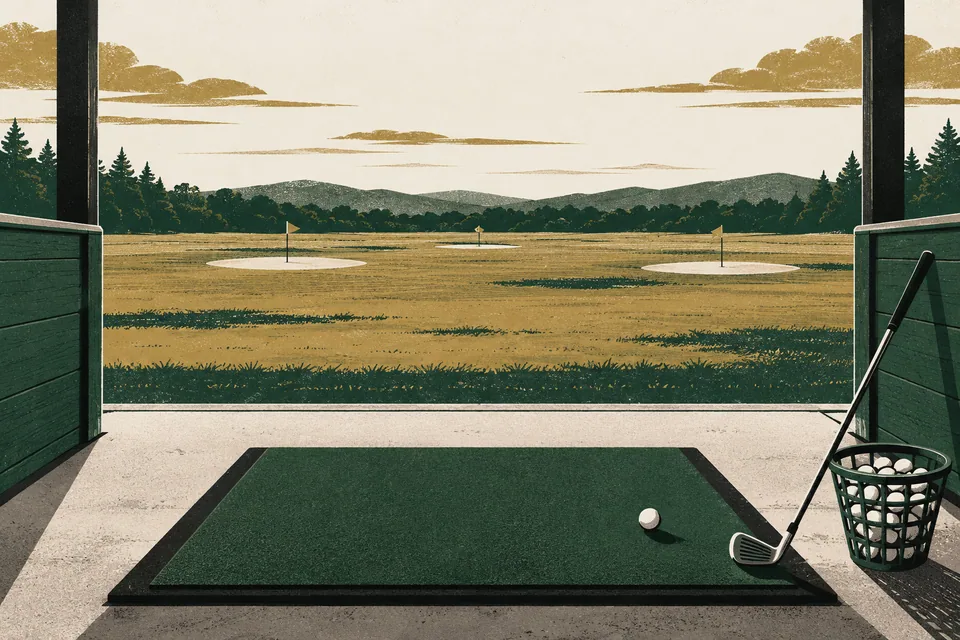
One club, one target, one question
Choose a familiar club and a target in the permitted hitting area. Keep them the same for a few shots. Ask: “Where did the ball stop?” Describe left of, in line with, or right of the target before guessing why. This is an editorial planning option, not a test or diagnosis. Follow the range’s rules and keep people clear of the hitting area.
You can use this instead of the sample ball-count plan below. A smaller task does not need a prescribed number of repetitions.
A glove and balls: keep the choice simple
A golf glove is optional. Right-handed golfers usually wear one on the left hand; left-handed golfers usually wear one on the right. That is typically the hand at the top of the grip. Check fit rather than choosing from a size label alone. FootJoy’s glove information.
A ball choice can start with feel and budget. For a first purchase, set a budget you are comfortable with and make your ball easy to identify. Try one model on short shots and putts before changing everything at once. These are decision questions, not a brand ranking or distance promise. Check any event equipment requirements. Titleist’s golf-ball questions and answers.
At a range, use the balls and equipment permitted by that facility; do not assume the balls in a range bucket are yours to take onto a course.
Was that from a mat or grass?
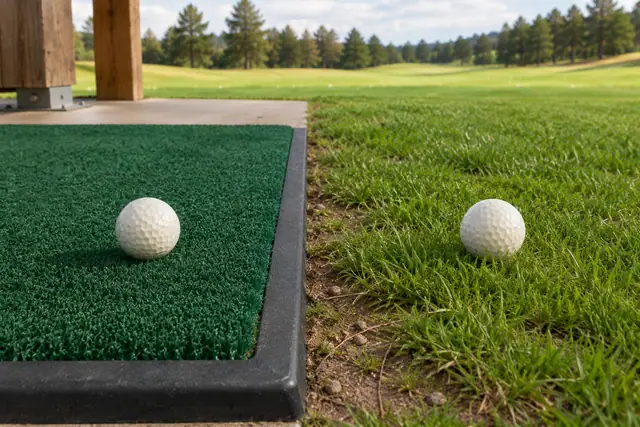
A facility may use mats to let grass recover or respond to weather. Follow its signs and use only the open practice area. USGA guidance on protecting practice areas.
The hitting surface changes the situation. A mat is a prepared practice surface; natural grass can have different slopes, lengths and ground conditions. Lie means how and where the ball rests. Record the surface and what happened before drawing conclusions about a swing. Neither surface guarantees better results. PGA of America on mats and grass.
Keep the club, target, ball stopping place and surface in a practice note. If you cannot see a result clearly, write that rather than inventing a precise landing point.
Try a 20-ball structure
If a short session suits you, this is one way to give it a beginning, middle, and end. Use familiar, comfortable movements, take breaks, and follow the facility’s instructions.
Start easy
Use a familiar short club for five easy shots. Take your time between shots.
Choose one visible target
Use the next ten shots to aim toward one target. Notice where each ball finishes without changing several things at once.
Repeat your setup routine
Use the final five shots to repeat the same setup routine, resetting before each shot.
The 5/10/5 split is our sample session structure. It is not an ideal workload, a tested protocol, or a result promise. Adapt or stop the session as needed.
Before you leave
Write down one observation and one question. If you are unsure what caused a shot pattern, save that question for an instructor instead of drawing a conclusion from one session.
Further reading
For general facility preparation and focused range practice:
- PGA of America: A Beginner’s Guide to Visiting a Golf Facility for the First Time
- Kris Hart, PGA of America: Four Must Dos Every Time You Practice on a Golf Driving Range
These sources provide general context, not endorsement of JAMY PRO or our exact session plan. JAMY PRO is not affiliated with the PGA of America.
Keep exploring
Make a practice note