What does the number tell you?
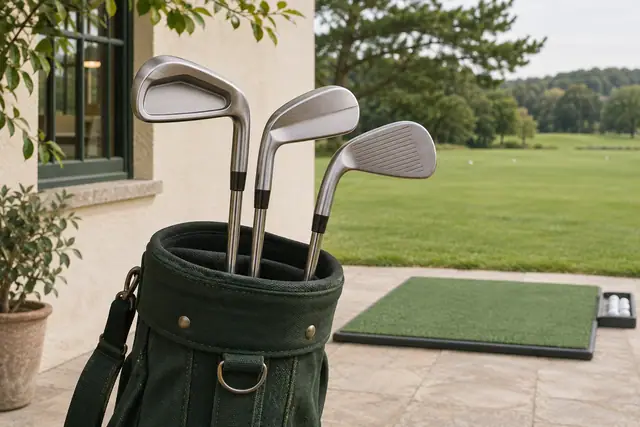
An iron number identifies a club within its set. The clubface is the surface that hits the ball. Loft means how much that surface tilts back. Within a matched set, higher-numbered irons generally have more loft and shorter shafts (the long stems of the clubs). Manufacturer specifications also show that the same iron number can have different lofts in different models. Titleist’s club specification tables.
Start by finding the model name as well as the number. If you are borrowing clubs or comparing two sets, write down both. That is more useful than assuming every club marked 7 is the same.
Can two 7-irons really be different?
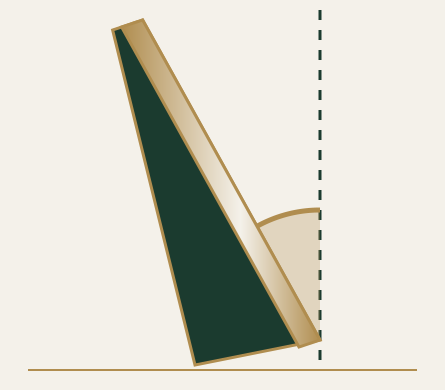
For example, Titleist lists the T350 7-iron at 29 degrees of loft and the 620 CB 7-iron at 35 degrees in its standard specifications, checked November 16, 2026. Custom adjustments can differ. These examples show a difference in face angle, not a guarantee that one club travels farther for you. See the manufacturer’s standard specifications.
This is not a recommendation of either model or an affiliation with Titleist. A lower angle is a design detail, not a beginner performance score.
Two 7-irons, viewed from the side. The dashed line in each panel is the vertical reference. The gold angle shows the face tilting back from that line.
Titleist T350: 29°
Titleist 620 CB: 35°
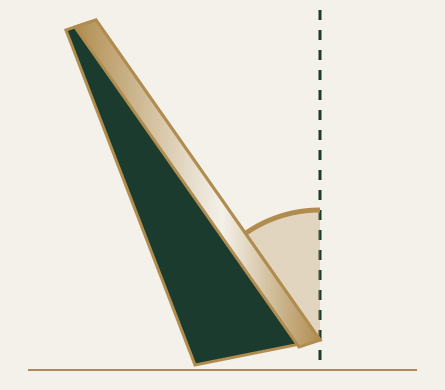
Existing simplified angle diagrams, not exact club shapes or product photographs. Custom adjustments may differ; no affiliation or distance advantage is implied.
How do you learn what your own club does?
At a permitted practice area, choose a familiar club and a visible target. Keep the club and target in your note while you observe where shots finish. If a screen gives a distance, record its label too: carry and total are different.
- Club number and model: what did you actually use?
- Distance label: was the number carry or total?
- Conditions: was this a range, simulator, mat or grass?
These are record-keeping prompts, not a swing diagnosis. Ask an instructor if you need help choosing suitable clubs.
Keep exploring
Source links support the specific facts beside them. They do not imply endorsement of or affiliation with JAMY PRO. Planning questions and examples are our editorial suggestions, not personal instruction or result promises.